Variety is the spice of life.
By Vincent Nguyen | July 31, 2023 6:39pm PST
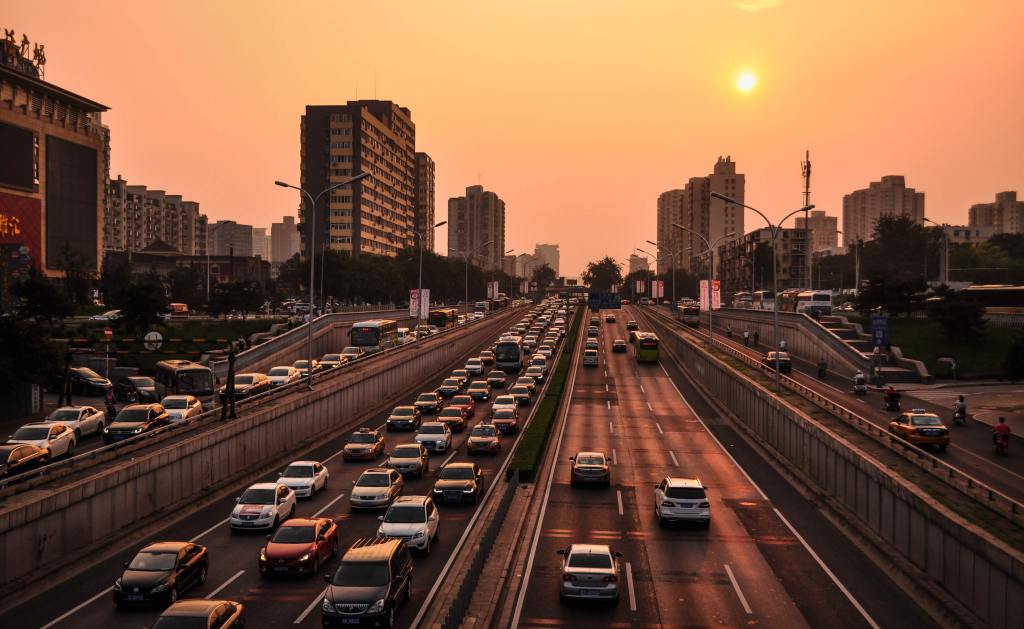
In terms of transportation and how we commute on a daily basis, it feels like we’re still limited by the number of choices we have to get around despite there being ‘numerous’ options available.
I think we’re still a long ways to go from having something for everyone within every budget. Not that there isn’t something for everyone today, but it’s almost as if we have to pick and choose our poison or live with one while sacrificing another. Out of all the transportation methods available today, each one has notable pros and cons.
I can’t speak for every city of every country of every continent, but at least for major cities in North America, commuting feels like it basically boils down to either one of two things, driving a car or taking public transit as the main forms of transportation. Everything else in between feels like they’re just there as satisfactory alternatives.
Let’s begin with a personal anecdote of mine relating to public transit and its cons:
So, one Sunday evening, I was on my way home after picking up several items at the grocery store. All seemed to go as planned until I got up to the platforms to wait for the subway (or Skytrain as we call them here).
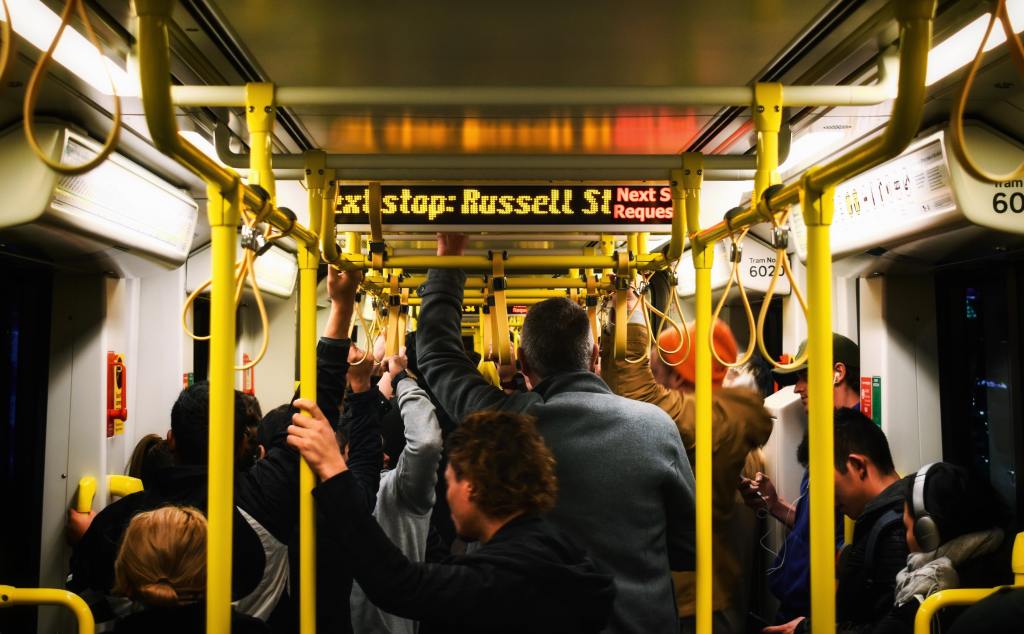
I didn’t expect many people would spend their Sunday evenings away from home, so things started to turn sideways for me when I realized the Skytrain was busy and somewhat packed that night.
Once the first set of Skytrain cars arrived, I was glancing through the windows to see if any seats were available — nope, all occupied, including a bunch of people standing inside as well.
No biggie I thought, as there might be seats available on the next one, I’ll just wait it out.
Bear in mind, I was somewhat distant from home (16km away), and the grocery bag that I was carrying had enough weight in it to make anybody fatigued if they stood carrying it for a long time, so it was wise to get a seat than to tough it out and stand the entire way home.
Anyways, another Skytrain car arrives a few minutes later, same results, seats are all taken.
And another…
My feet was getting tired, benches were all occupied as well.
At this point, nearly 20 minutes later, I was ready for the best possible ‘escape route’.
I decided to get on the opposite direction that’ll take me even further away from where I needed to go in order to obtain a precious seat — and stay on it until it reverses back the other way.
My evening was obviously hindered by this as I had to go all the way towards the other end of the station, then all the way back to where I was originally waiting, and finally on my way home.
I know this seems like a little overkill and I could’ve boarded one of the packed Skytrain cars scouring for a seat as soon as people got off, but considering how there were other passengers standing inside as well and likely as many people coming in and out at every station, it would’ve felt like playing a stressful version of musical chairs. No thanks.
It’s also customary to leave seats for others that really need them (seniors, parents, disabled, etc), so I’d feel somewhat guilty snatching the last seat from said people.

At the end of the day, I think it’s safe to assume that any of us who’ve ever taken public transit, where these moments of inconvenience has happened to us, have made us ponder what other alternatives are out there for commuting, and if it’s a viable option and better.
I can definitely say that it’s happened to me countless times.
I reckon that we’ve all contemplated in our transit commuting lives when we’ll be able to have a car at some point or another.
I don’t know about anyone else, and maybe it’s just me, but when I’m waiting at a bus stop or on a metro platform for a lengthy period of time, I sometimes think to myself ‘Damn, will I ever be able to afford a car?’ or ‘Will I enjoy getting around like this forever?’
The answer to these questions is currently a big fat ‘no’ and ‘no’, and most likely remain this way in the future.
All these thoughts about being in a vehicle full of strangers sharing oxygen and germs, and for a lack of a better word, feeling like a peasant, can be quite discouraging having to use public transit on a consistent basis.

Metro station in Mexico City – Image courtesy of The New York Times
To make matters worse, the price of public transit isn’t getting any cheaper.
As a matter of fact, it usually increases annually here.
For example, where I live the highest tier of a monthly pass (3-zone) just increased to almost $200 on July 1st for adults. This pass lets you travel almost anywhere across our metropolitan cities on a fully automated subway system including buses, which isn’t so bad and is affordable compared to having a car.
But if you take into account what I already mentioned about public transit along with a multitude of obvious (or not so obvious) nuisances and inconveniences, you might begin to understand why people need more choices (and better ones) for how they get around.
Let’s go over a few of these inconveniences:
Firstly, the ‘luxurious’ feel isn’t there like owning a car, where you have your own space and able to get from point A to point B more efficiently.
Instead, you have to wait for buses and/or subways to arrive at your station while [maybe] carrying your heavy backpack and/or grocery bag, then walking a certain distance to where you need to go, perhaps on a rainy day.
Secondly, not having trunk space to put stuff in is one of those things that you just don’t realize how life changing it can be until you’ve actually carried it on transit and foot.
And last but not least, the unreliable aspect of public transit due to the fact that the transit system here doesn’t run 24/7. So if someone has to get to work extra early or home late on a consistent basis, they’re out of luck.
Either pay more for Uber or Lyft each time, or get a ride from a family member or friend if they’re available.
Overall, public transit isn’t as ideal as one would like it to be and it can be very time consuming like my Sunday evening.
So what else is currently out there?
Another form of transportation that I thought about using are these car sharing services like Modo & Evo here in BC Canada.
If I’m not mistaken, Zipcar & Car2Go are the US equivalents and other provinces in Canada.
Car sharing can be a nice alternative to owning a car, but they do have their downsides and it’s definitely not for everyone.
One of the reasons why I don’t like them is because they’re unreliable in the sense that when you actually need a vehicle in the very moment or ‘right now’, you’ll still need to do the booking before using it, so for emergency situations or last minute pickups at the store, you might need to find another solution.
Not to mention you also have to keep your fingers crossed that your preferred type of vehicle is available when you need it and where you want it, so it can be a bit of a hassle to juggle through everything when you don’t have the means to make the extra effort or plan in advance.
Another reason I don’t like car sharing is the fact that it’s not really meant for daily commuting as the cost can add up to be just as expensive if not more than ride hailing or having your own personal vehicle.
But even worse is the thought of sharing a personal vehicle with total strangers, which isn’t my cup of tea whatsoever. It’s too risky in my opinion and conflicts could arise.
I rather it be mine and use it how and when I’d like to.
That said, actually owning a personal vehicle isn’t any better due to its high costs and maintenance.
The cheapest brand new car in Canada as of this writing is the Mitsubishi Mirage, a compact 4-door gas car that retails for $14,298, which can be financed for $288/month over 60 months.
But then you have to factor in the costs of two other mandatory expenses in order to drive, which varies from place to place and British Columbia is no exception. They are insurance (~$200/month (for a compact)) and gas (~$130/month).
Overall, the cost of owning the cheapest brand new car on the market today is roughly over +$600/month CDN.
And I haven’t even included things like parking fees and whatnot.
I get that people can buy used cars, but I imagine many out there like myself would rather have something brand new, where the cost of maintenance is lower from the start and perhaps later on in its life cycle.
Purchasing something that already has wear and tear and could potentially break down sooner than expected is the reason why I choose to stay away from the used market, for peace of mind’s sake.
When it comes to owning something as important as transportation, I prefer brand new.
So with all of this considered: cars, public transit, and car sharing out the way, what other modes of transportation are out there? (Which I’ll get to in a bit) But more importantly what type of new transportation could be introduced to the masses? A one that…
(*gasps for air*)… is faster than riding a bicycle, keeps you enclosed and protected from bad weather, doesn’t have to be shared with strangers, doesn’t have to be booked every time you need a ride, is electric, and cost somewhere in between $200/month (mentioned earlier with transit pass) and +$600/month?
Say roughly somewhere around $300-400/month or less (insurance included if it’s required), and/or somewhere around $10,000 CDN or less in retail price?
Right now, nothing really exists on the market that fits this criteria.
So imagine if a commuter is willing to fork out an extra $200 more per month on top of what they’re already paying for public transit here in BC for a better mode of transportation.
Good luck.
There’s a huge window of opportunity for innovation to produce something new within these prices, which a car manufacturer or a smaller to medium sized micromobility company can tap into and take advantage of, but for some reason hasn’t yet.
To remain unbiased, it’s probably because profit margins would be too low for them, is just a guess.
On the other hand, it’s quite possible that they haven’t realized the potential for it yet.
Whatever the case, the demand for it is definitely there, for more alternatives.
People do want to commute in something better than a subway or bus, and something more affordable than a personal vehicle.
To prove this, just a couple of months ago a rebate program was introduced for e-bikes and e-scooters in my province, which initially received criticism due to prerequisites that had to be met in order to be eligible. It ultimately caught on like wildfire that within the first 24 hours of launching early last month (June 1st), it received 12,000 applications.
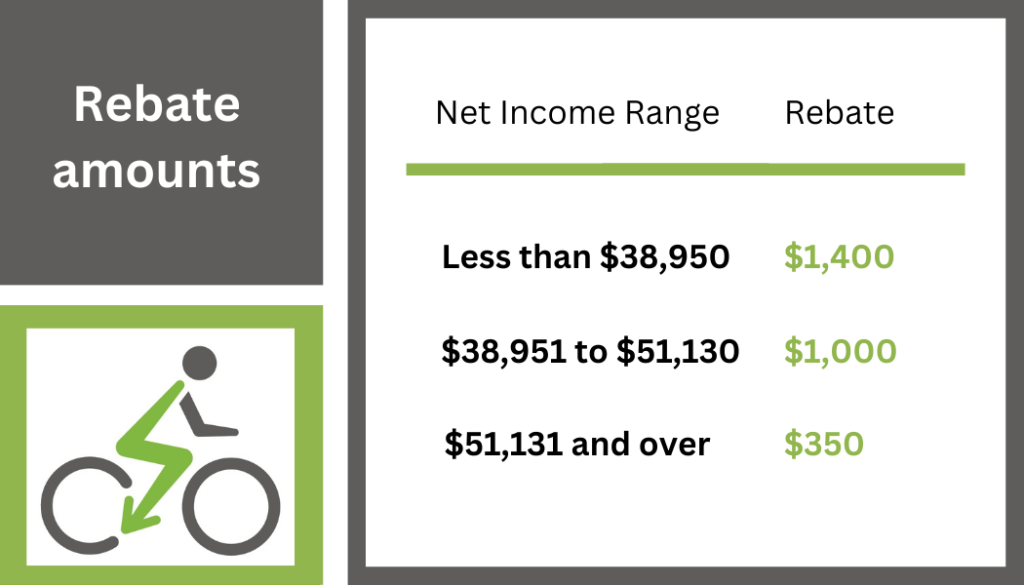
12,000! And that number has most likely increased since.
It was more than what the government anticipated that it temporarily crashed their site, as well as placing people on a long waitlist that’ll probably last beyond next year.
The results from this alone could be confirmation that our society as a whole, or at least in North America and in Western culture, there’s a huge demand for something better than just buses, subways, and cars — and even e-bikes and e-scooters for that matter.
This is the reason why I chose to invest in a premium e-scooter instead of taking public transit. It’s the only other alternative currently available that checked most of the boxes for me.
But don’t get me wrong, e-scooters and e-bikes aren’t perfect either. They have their fair share of pros and cons like the rest of them.
For instance, e-scooters and e-bikes do give you the comfort of having your ‘own space’, as opposed to being surrounded by other people in public transit and sharing oxygen with them, but they don’t keep you warm for the entire duration of the commute when it’s cold out, and they certainly don’t keep you enclosed and sheltered from poor weather conditions like a car would.
So what can we expect from the future?
That’s a good question, your guess is as good as mine, but the price will always be a major factor, especially for lower income people.
eVTOLs (electric vertical take-off and landing), basically aircraft taxis, is one of them.
However, the price to ride one of these things probably won’t be catered towards budget conscience commuters at first (and for a while), which doesn’t fit the bill for the targeted price range we’re looking for.
Electrameccanica, Canada’s fairly recent electric vehicle company based in BC, tried (and is still trying) to provide us with another form of electric transportation.
They launched the now discontinued three-wheeled electric vehicle (pictured below) due to faulty issues.
SOLO, as it was called, was debatably a nice vehicle and it nearly matched all of the goodness that got me gasping for air earlier, except it was nowhere near the $10,000 CDN or lower price point. It retailed for $18,500 USD (roughly $25,500 CDN by conversion).
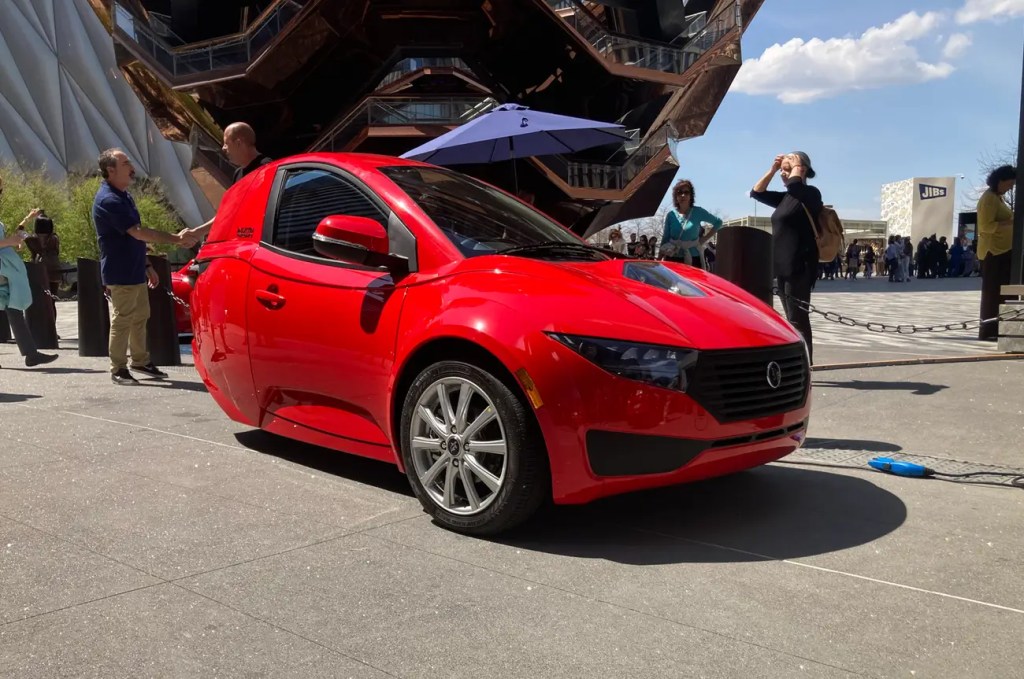
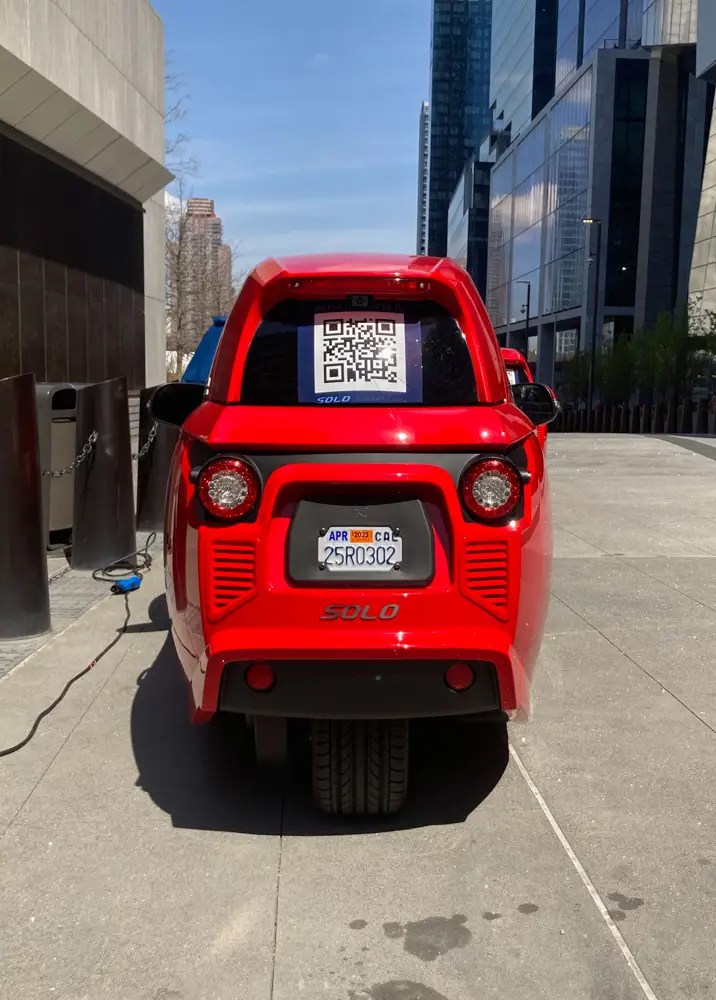
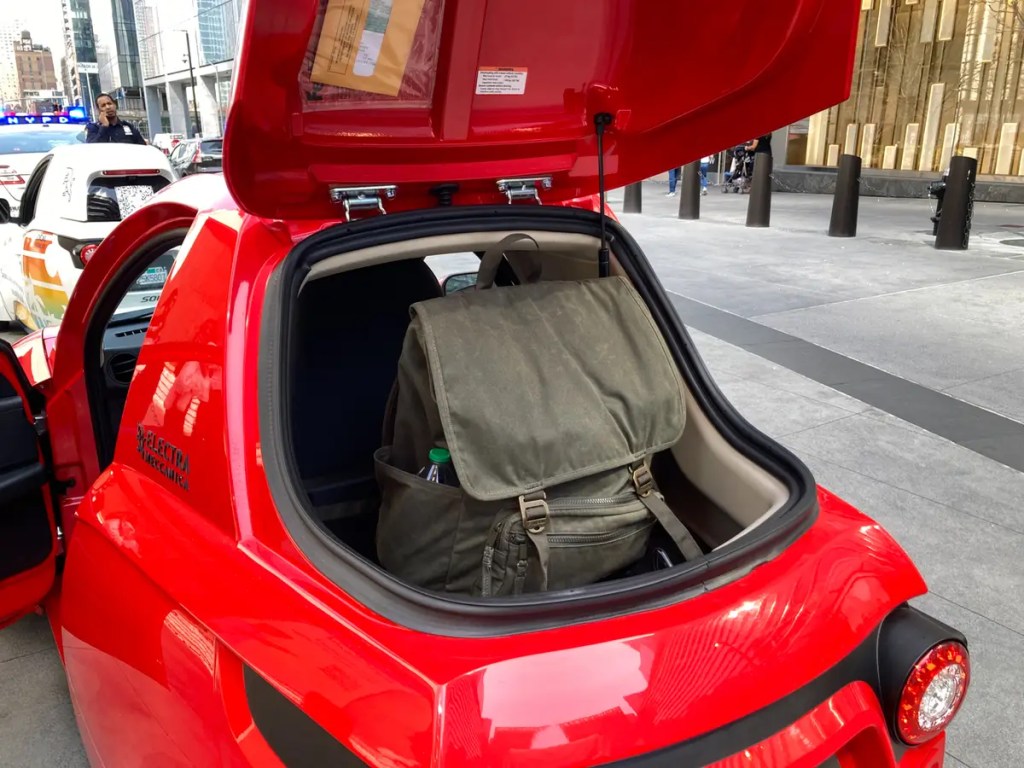
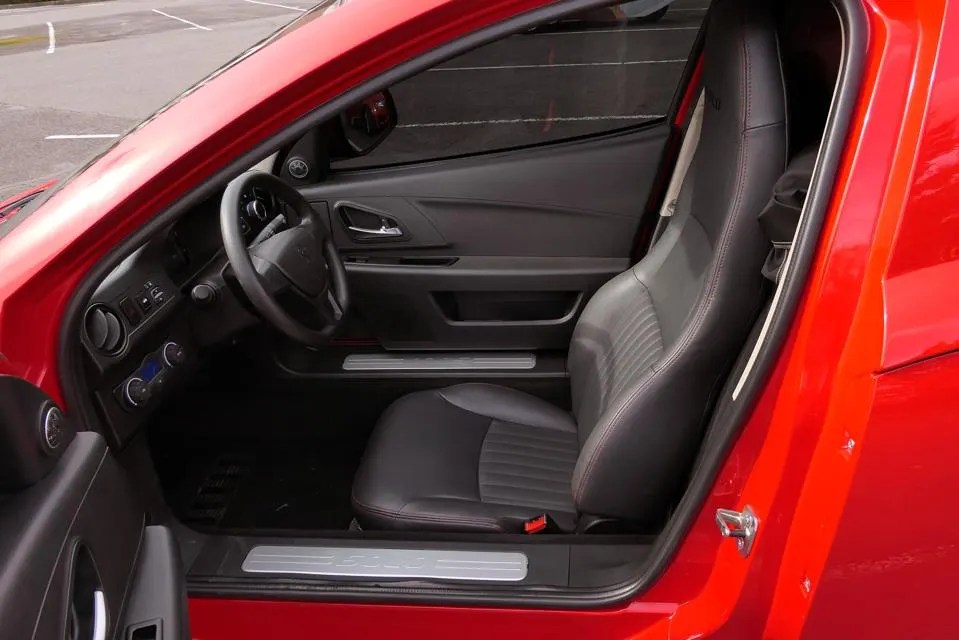
Images courtesy of Business Insider & Forbes
Electrameccanica is now focused on designing and building a four-wheeled EV dubbed Project E4, that is by their definition, ‘smaller, nimbler EVs with eye-catching design and personalized features.’. Basically, a super compact or mini EV that’ll probably cost around $25,000 CDN, unfortunately. And will most likely require insurance expenses on top of it.
Apollo Scooters, one of the premier e-scooter brands out there, introduced prototype accessories (pictured below) for their premium hyper e-scooter, the Apollo Pro 2023, which would give us an all-weather enclosure ($500 MSRP), cargo attachment ($100 MSRP), and seat ($150 MSRP) that would all be sold separately.
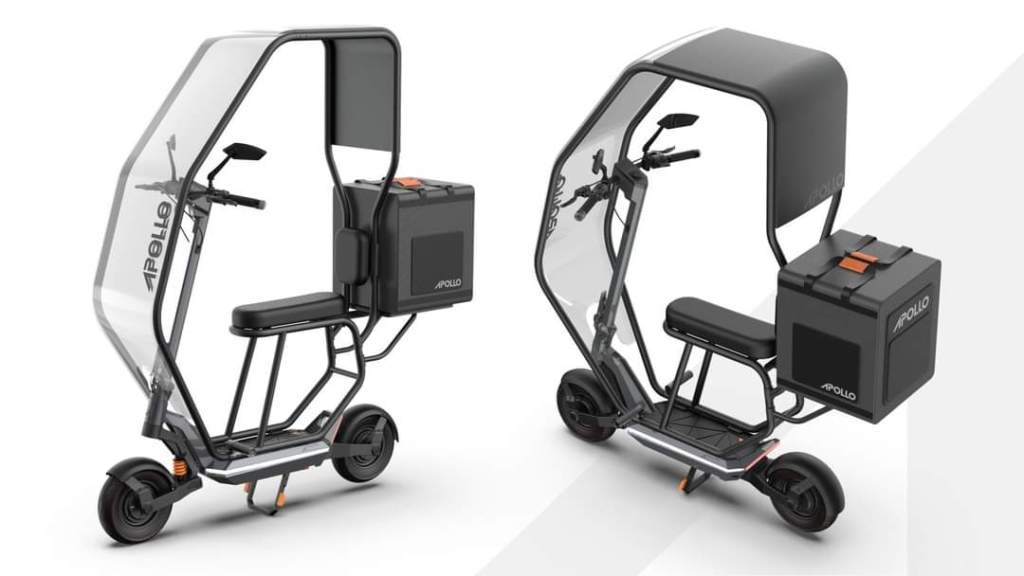
As you can clearly see in the picture, the enclosure is a welcome first step but it obviously doesn’t keep you completely protected from bad weather, so unless they refine this prototype to keep you fully enclosed (or at least prevent your sides from getting wet), it won’t be on my wishlist.
But, the amazing thing about this?
If all of these accessories were available for the Apollo Pro today and bundled together with the e-scooter itself, it would still total well under the $10,000 CDN or lower price point, about +$4,500 USD (+$6,000 CDN) — and it doesn’t even need insurance.
Yet, even if it does need insurance via some sort of required regulation (which is highly unlikely), it’ll still be well under the targeted price point.
So the price threshold is actually possible for those who thought it couldn’t be.
Anyways, for now, we can probably draw a couple of brief conclusions.
The good news: this gives us hope for what lies ahead. New modes of transportation are constantly being prototyped, pilot-tested, and maybe developed.
The bad news: It might take a long [ass] time before we truly see an incredibly affordable vehicle. (Fingers crossed for Apollo to make that fully enclosed enclosure)
Maybe I’m a little too picky, maybe nothing will ever get to these too-good-to-be-true prices.
As long as our planet doesn’t come to a sudden halt, I’ll remain optimistic that something miraculous will come along.
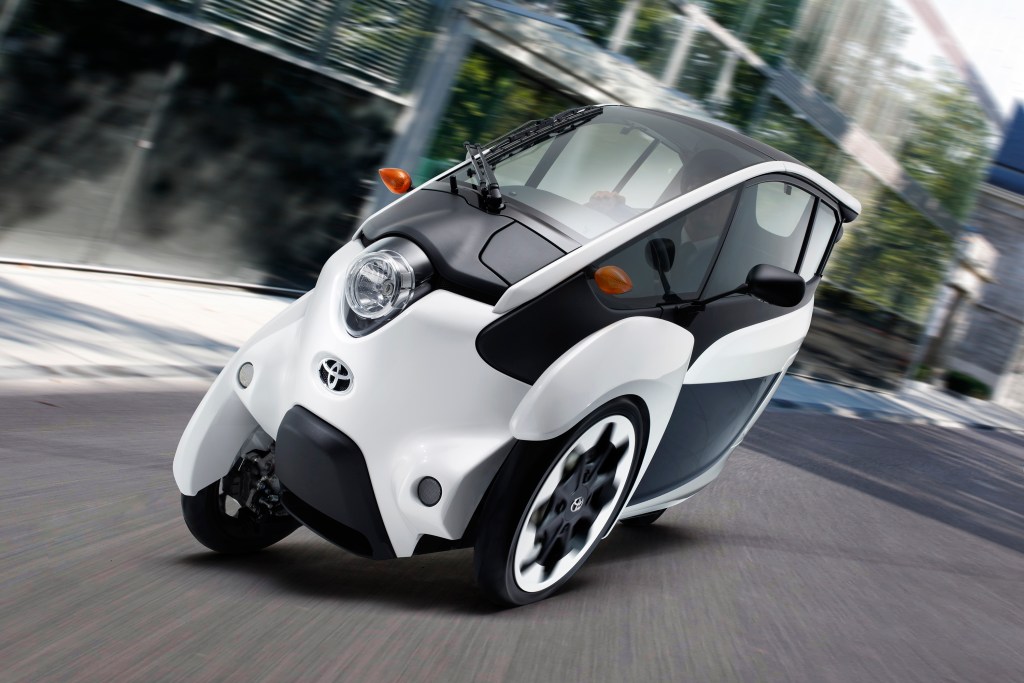
In the perfect world, I envision that if we had something along the lines of the SOLOs/Project E4s or similar types of vehicles shown below, within the sweet spot of a price range mentioned earlier, then convenience, affordability and quality of life would probably be less of a hot topic for low to moderate income people.
Toyota i-Road
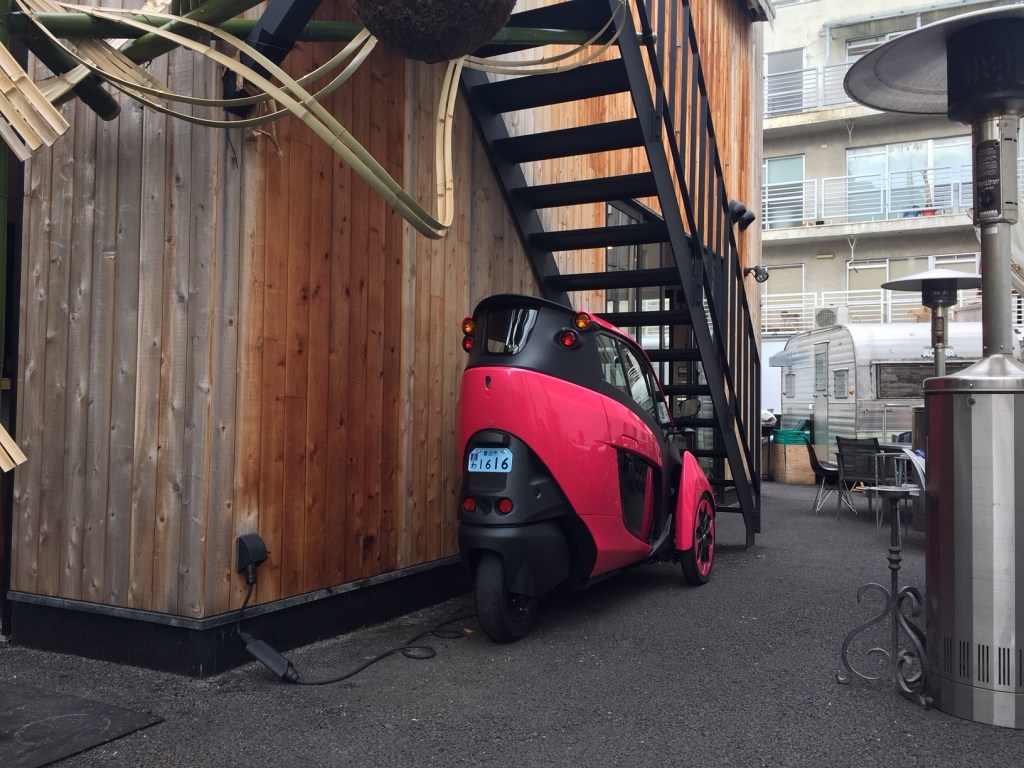
Lit Motors C1

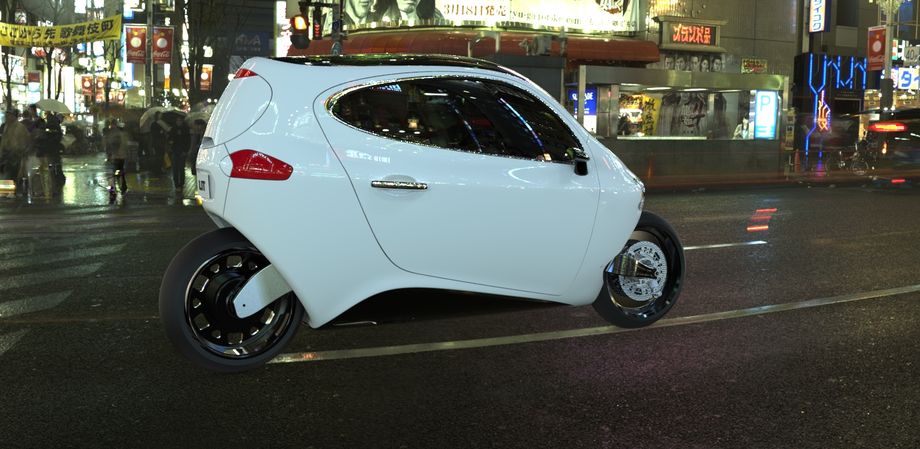
Just imagine how many people would actually make the immediate switch from public transit over to these miniature style vehicles if the price was right.
Because otherwise if the price was in the same range as current vehicles in the market today, people wouldn’t see the difference in getting one.
Hopefully, one, just one of the major auto brands out there will invest and produce such vehicles for the masses one day in the not-so-distant future.
Or maybe a new player will step in and say enough is enough!
Until then, we can only work with what we’re given.

 Vince
Vince 
Leave a comment