
Contagious behaviour can really harm or heal us.
By Vincent Nguyen | May 22, 2023 8:31pm PST
The topic of social media and the effects it can have on people has been something I’ve noticed more and more over the years and can be hard to ignore.
You know that saying, ‘monkey see, monkey do’? Who doesn’t, right? Basically, when somebody imitates another’s actions without putting much thought into it.
Well, not to sound negative, but I’ve come to dub a new terminology for myself over these past few years called ‘social media monkeys’ to reflect that saying towards certain users on social media. The ones who use social media in a way that become too engaged with popular ‘hashtag’ movements or anything big that’s trending on these platforms, and in turn, they begin to imitate these movements or actions within their own community or country — almost like a cult of a devoted fan-base.
These type of users have probably been around for a while, but I started noticing them during the Covid pandemic.
The one example that stood out to me the most, and the reason for making this post in the first place is the Stop Asian Hate movement that began around March of 2021 in the US after a mass shooting in Atlanta that killed 8 people a week prior (six of whom were Asian).
Not too long after the shooting, an influence begun growing and growing like a chain reaction almost everywhere where it was relevant. Rallies started happening in other countries including Canada (my home country).
But here’s why it bothers me and why this topic of ‘social media monkeys’ and the ripple effect of social media could be a concern for society.
The World Health Organization declared Covid-19 as a pandemic back on March 11th, 2020.
About 10 weeks later on May 22nd, 2020, an article came out in my hometown of Vancouver, Canada and in other parts of the world stated that Asian hate crimes were on the rise at a ‘disturbing’ and ‘staggering’ rate compared to the same time a year prior in 2019 (before the Coronavirus outbreak happened).
Vancouver and its nearby cities consist of a large Asian population — somewhat comparable to San Francisco, California. According to a 2021 census, our Asian population in the metropolitan area (excluding West & South Asians) accounts for roughly 30% of our total population. But if you just count Vancouver alone, the Asian population jumps even higher to roughly 38%.
All that said, with a large Asian population in Vancouver and a staggering increase in Asian hate crimes since the pandemic began, why wasn’t Vancouver one of the first places to start this Stop Asian Hate movement?
Why did it take a year later after a mass shooting in the US for other countries who were affected by this to finally decide that these rallies be of great importance?
If the mass shooting hadn’t occurred, would they even take place?
I highly doubt it.
I understand these rallies are for a good cause and to show support, but it seems kind of odd to me that a major tragedy had to have happened first (like the death of people) before action is taken.
It’s similar to what happened in the events of 9/11, where after the terrorist attack took place, airports suddenly decided to put a tighter clamp down on security to prevent such things from happening again.
So the same type of question could be asked then compared to the Stop Asian Hate movement, why wait until something catastrophic unfolds? Why wasn’t the security as tight before the attack?
Anyways, it’s not just the Stop Asian Hate movement that pertains to these ‘social media monkeys’, but the Black Lives Matter movement that resurfaced in 2020.
After the murder of George Floyd that got the infamous “I can’t breathe” quote out there plastered on posters and throughout social media, a man from my city used that exact same quote in a physical altercation that got him subdued from a headlock for not wearing a mask.
Sure, it might have just been a coincidence that he blurted out “I can’t breathe”, but the way how he said it, the similarity to George Floyd’s incident, and the timing of it all seem like it wasn’t the case — but more so the likelihood of his consumption of social media.
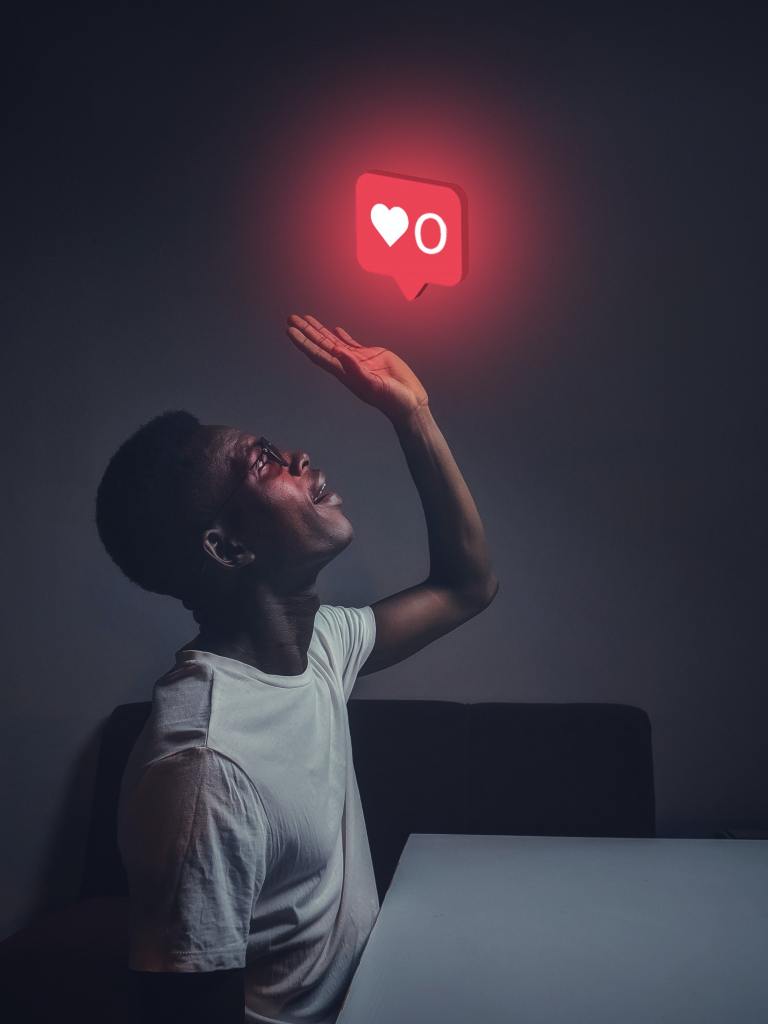
On the other hand, to prevent myself from seeming overly bias or one-sided, this doesn’t mean that the ripple effect of social media is an entirely bad thing.
Back in 2020 during the pandemic, a growing movement called the #ClapBecauseWeCare or #ClapForOurCarers, had people clapping or clanking on their pots and pans to show unity and gratitude towards frontline workers.
It was heartwarming to see people in different parts of the world coming together during a stressful time.
I guess at the end of the day, there will be people who digest social media the wrong way and the right way.
On one side of my brain, I wish people were more focused on what’s going on in their own communities/cities/countries instead of what the rest of the world is doing, yet on the other, paying attention to what the rest of the world is focused on helps spread awareness in a positive way.
The most recent example of the latter that I could think of is the topic of inflation and prices of groceries going up. It gotten so bad that news of it quickly spread almost everywhere, where the government had to step in and enact relief funds and cheques for people to cope with affordability.
As for the former, I don’t have a solution for how people can stay more engaged and take action on local issues when they first arise rather than following what the rest of the world is doing.
It’s probably best to just let the majority of the population do what they feel is best and/or educate them with their time on social media.
 Vince
Vince 
Leave a comment